Technology
Last Post Date: 25th March 2009

51 Posts

14 Comments
Insightful comment on mobile telephony technology and market.
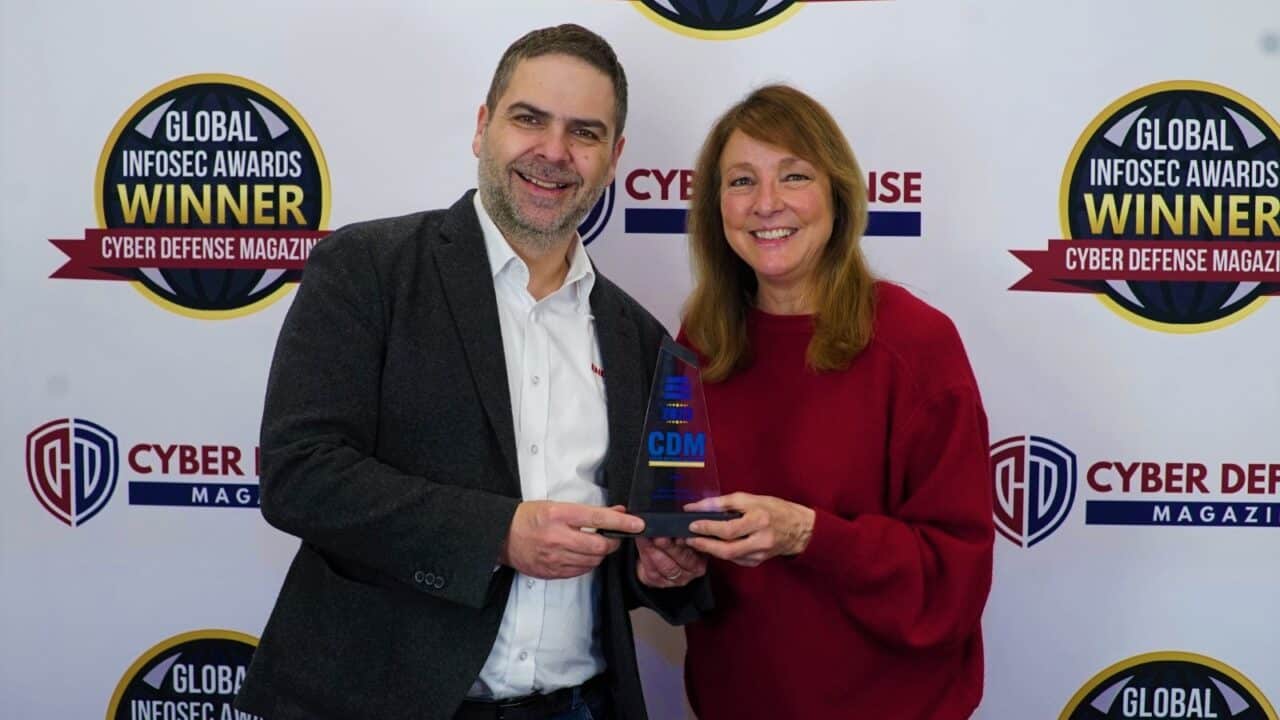
Cisco only selects trusted and leading applications for its IP Next Generation Network Portal, so we are really proud to be included! The above links also feature an informative video about how to protect your networks, starring our very own Simeon Coney.

0 Comments
Email blog entry
Add Comment
Rate this Post
Abilene Christian University will hand out Apple's iPhone 3G smartphone to two-thirds of this year's entering class of 950 freshmen. Students will be expected to use the devices to brainstorm ideas and get virtual handouts and podcasts during class. Instructors will use them for such tasks as monitoring attendance.
"This is a new platform for learning, in the same way a laptop or a desktop was a new platform," says William Rankin, co-director of mobile learning research at the school in Abilene, Texas.
There are two factors that make this situation more favorable- the first being that these are college-age students, and the second is that the school provided the whole class with the devices. This creates a setting where the students are of a more responsible age and have equal access to the smartphone. Additionally, the iPhone is being integrated into the learning environment which leads to it being more of an enhancement to learning than a distraction.

0 Comments
Email blog entry
Add Comment
Rate this Post
Despite fears that mobiles and MP3 players are a huge distraction, it is claimed schools can get the most out of pupils by giving them full-time access to the latest gadgets.
Academics said mobiles could be used for a wide range of educational purposes, including creating short movies, setting homework reminders, recording a teacher reading a poem and timing science experiments.
New-style "smartphones", which can connect to the internet, also allowed pupils to access revision websites, log into the school email system, or transfer electronic files between school and home.
This suggestion is a stretch for a number of reasons. First of all, how often are students filming movies or recording a teacher reading passages? Yes, they record video clips with their phones, but they are a few minutes long at best and honestly, how much of the school day include lessons where students are making movies?
And setting homework reminders? For decades pen and paper worked just fine and if a student wants to time a science experiment, they can probably use a watch.
The article mentions concerns expressed by school officials and law enforcement:
It is claimed that the technology is a distraction from pupils' work and fuels "cyber-bullying" - as children take compromising pictures and video clips of teachers or pupils and distribute them to friends.
Police also warn that carrying mobile phones heightens the risk of being mugged.
These consequences far outweigh the benefits that the researchers listed. And when you really think about it, what percentage of the average student population is carrying high-end smartphones? Not a big one. The devices alone can cost hundreds and there’s the added monthly data fee on top of the general operator plan.
While technology certainly has enhanced the school experience, not every single innovation is appropriate for the classroom.

0 Comments
Email blog entry
Add Comment
Rate this Post
The Mobile Marketing Association has published its guidelines for advertising pushed over Bluetooth connections, and considers anyone who hasn't opted out to be fair game for spammers.
The guidelines are now available for public review until 26 September, and take a distinct step beyond the UK's Direct Marketing Association (DMA) rules in that they consider any handset left in "discoverable" mode to be implicitly giving permission for pushed adverts - something the DMA explicitly rejects.
Talk about a great way to turn off consumers! So by their logic, buying an accessory leaves you open to continually paying for unsolicited communication? What’s next? The purchase of a house through a real estate agent leaving the buyer to expect that the agent could come into their house at anytime, making home improvement suggestions?

0 Comments
Email blog entry
Add Comment
Rate this Post
We talk a lot about how malicious activity can affect mobile initiatives and innovation. But how about the mobile functions actually working?? Wireless Week’s Monica Alleven wrote an interesting piece on how the highly anticipated announcement of Barack Obama’s US Vice Presidential running mate via text message, while a landmark event, didn’t exactly go as planned:
Keynote Systems said that in the week leading up to the Obama campaign’s highly anticipated text announcement, things weren’t working too smoothly. In fact, based on its tests, Keynote believes between 40% and 50% of people who subscribed to get the VP selection text message may not have received the message in a timely fashion or “very likely” never received the text at all.
Keynote conducted 600 tests on the Obama ’08 Campaign short code from Aug. 13 to Aug. 22. Results revealed it achieved consistent availability only slightly more than 50% of the time. And this time, it doesn’t look like you can blame the carriers’ networks, said Shlomi Gian, director of mobile business development for Keynote.
The article goes on to say that it is believed the issue stemmed from the high volume of subscribers, making it difficult for the aggregator, SinglePoint, to successfully deliver. Whatever the reason, it all goes back to one issue- the need to ensure consumer confidence. In order to attract users, especially when it’s for a paid service, providers need to do their best to work out potential bugs well ahead of time.
Keynote’s director of mobile business development, Shlomi Gian, certainly hit the nail on the head:
Particularly as more brands explore using short codes on a mass scale, Gian said a solution – which Keynote offers – for testing and monitoring common short codes is needed to ensure the delivery of critical information and reliability.

1 Comments
Email blog entry
Add Comment
Rate this Post
For most of us, peer acknowledgement holds more weight than we would like to admit. A case in point is the very cleverly assembled “Who’s Who” market listing. Targeted recipients receive an email stating that they have been nominated for this prestigious list and need only verify some details with a “Director” from the “Institute” to receive the award. When the person calls, they are given a thorough, ego-affirming interview and congratulated on their acceptance into the 'fold' but then quickly overtaken by a standard and quite pressurised sales pitch to purchase a “membership.” (Only paid members are allowed to appear on the list.)
For those of you who think that you are beyond such trickery, the mobile Beselo virus holds insight into the importance we place on inclusion and the risks we will take to be “in.”Beselo spreads via MMS and disguises itself as a multimedia file (so photo, wallpaper, music download, etc.) It spreads using the contacts in a person’s phonebook, and many people are fooled into thinking that a friend or colleague has sent them the attachment. Once the attachment is opened, the virus is downloaded to that phone and continues to spread.
Beyond personal pictures, there has not been large scale sharing of multimedia files mobile to mobile. So, what would cause people to throw caution aside and open attachments on their phones? Our guess is that the inclusion factor plays at least a small part. Who does not want to be in on the latest fad in mobile? Whether it is a video, ringtone or image, being in the know is very attractive for most of us – and the creators of Beselo knew this and gambled on it. With mobile, one must be as cautious as with seemingly legitimate sales pitches, and realize that confirming the source of the communication is essential before taking any next step.

1 Comments
Email blog entry
Add Comment
Rate this Post
Mobile ticketing seems to be an exciting area that’s especially being explored in South Africa, and the opportunities are abundant:
“With the world's focus shifted to South Africa for 2010, we've had huge interest from sporting bodies, not only from the 2010 World Cup, but for the 2012 Olympics,” he says.
There are the obvious advantages mobile ticketing provides including using the cellphone (MSISDN) number as a means to uniquely identify the ticket purchaser, a digital ticket which saves on printing costs and all the additional information the MMS ticket can provide about the game and venue (stats, location of food kiosks, rest rooms etc).
For now it seems best to use the common sense rule of thumb one would use for anything new- only trust sites and providers that you know to be authentic. As safe guards are developed and enhanced, such as digital watermarks, consumers will have more and more secure options to provide for a positive mobile shopping experience. But for now, early adopters are advised to be aware and use good judgment.

1 Comments
Email blog entry
Add Comment
Rate this Post
The second-quarter update of the Mobile Advertising Report revealed mobile subscribers in India are receiving many more advertising messages on their mobiles (85%) as those in the U.S. (37%).
The most common ad format continues to be text messaging with almost three-quarters of Indian subscribers having received ads in that format, 48% in the U.K. and 22% in the U.S. The most-recalled ads were for mobile services, entertainment and music services.
Subscribers in the U.K. are more likely to receive mobile Internet advertising with 16% recalling the receipt of an ad formatted as such compared with 8% in the U.S. and 4% in India.
The report goes on to predict that mobile Internet advertising will soon be rivaling that of SMS ads in terms of penetration numbers. We will certainly be watching the “great mobile ad race” very closely.

0 Comments
Email blog entry
Add Comment
Rate this Post
Throughout the world there has been many levels of adoption when it comes to mobile advertising. South Africa is certainly no different and can even be viewed as a pioneering region in some regards. Last year Vodacom released an interesting mobile advertising division known as “On-The-Line”, which appeared to have some good results with early trials.
One of the key benefits of this platform to advertisers is the fact that it is highly measurable. “Eyeballs Mobile allows advertisers to determine exactly which customers they would like to target with their advertisements and our metrics allow us to report on the exact profile of the people who have viewed the advertisements,” says Beyers. “This will minimise wastage and assist in customising advertising messages for specific target audiences,” he adds.
Customers gain control over their advertising consumption. “As a user you get the choice to download the software, view the advertisements and collect rewards or not,” he says. “And while we believe the combination of rich content and rewards will be reason enough for our customers to use this platform, there will be random cash prizes up for grabs during the launch month,” he concludes.
As each region around the world spotlights various approaches to mobile advertising, the one common theme seen here is a focus on PRN20080211">results measurement, demographic targeting, and ensuring marketers are not invasive or shaking consumer willingness to receive such mobile advertising by subsequently creating Spam. The rest of 2008 will certainly provide some interesting developments! And we will certainly be watching… After all, according to eMarketer direct response mobile advertising has been on the rise at a rapid pace globally:

0 Comments
Email blog entry
Add Comment
Rate this Post
With the US Presidential election rapidly approaching, the Democratic nominee Barack Obama is making some headlines with his recent announcement that the VP candidate’s name will be revealed by text message. Beyond that news alone was the fact that for many people, thoughts turned to whether or not this would lead to spam mobile spam.
And the answer so far, according to InformationWeek’s KC Jones is, “No”:
The Obama campaign announced over the weekend that supporters could sign up to receive e-mail or text messages "the moment Barack makes his decision."
"You have helped build this movement from the bottom up, and Barack wants you to be the first to know his choice," the campaign explained to e-mail subscribers. "No other campaign has done this before. You can be part of this important moment."
The notice said those who sign up would be the first to know and it urged supporters to forward information about the "opportunity" to friends, family, and coworkers.
Those who want to receive the information via text send a text with "VP" to 62262.
After requesting contact information, including phone numbers and e-mail address, the sign-up page allows users to check a box that will sign them up for periodic text updates and notification regarding the nominee. Users can sign up without checking that box.
The next screen encourages them to forward the message to up to 10 friends and acquaintances at once. It also offers to use an e-mail contact importer, while reassuring, "Don't worry -- we won't hold on to any of the email addresses you share."
We will be curious to see if the campaign announces how many subscribers they get, as well as the long term impact this type of mobile marketing effort will have.

0 Comments
Email blog entry
Add Comment
Rate this Post
With the Olympics’ Opening Ceremony kicking off today and thousands of spectators packing Beijing to watch the events over the next couple of weeks, the world will be watching. But unlike past games where viewers simply depended on network television and the Internet to keep up with all of the action and advertisers, this time marketers will be leveraging mobile in a variety of unique ways.

Take Coca Cola, for example. The brand will be launching its largest Olympic games push in history and they are doing it with Bluetooth:
Pioco, China’s most influential Bluetooth Media company, has wired thousands of hotspots in and around the Olympic stadiums, hotels, restaurants, clubs, cafes and other leisure venues of Beijing and Shanghai to broadcast Coca-Cola Bluetooth video commercials to Bluetooth-enabled cell phones.
When Bluetooth- enabled consumers enter a hotspot, they receive a message on their device, asking if they would like to download content from Coca-Cola.
Within Beijing, Pioco has built a Bluetooth hotspot network that covers the International Trade Center, Financial District, Zhongguancun commercial district, Wangfujing shopping street and Xidan shopping district, Dongzhimen transportation node, Xizhimen subway area and other transportation hubs around the city. Coca-Cola believes that the campaign will reach consumers even more intuitively than traditional forms of media.

0 Comments
Email blog entry
Add Comment
Rate this Post
Despite the fun and excitement of the Olympic games, one can’t help but be very aware of the political tension that comes with it all. Most notably, the Chinese government’s practice of censorship and spying, which is set to be as strict as ever.
When you make a call on a regular mobile phone, a signal is sent via the airwaves. Chinese intelligence officials can then use a special listening station to tap into the frequency and eavesdrop into the conversation.
Once the call has been monitored, the unique number can be stored and tracked all over the world, meaning their phones would no longer be secure.
Members of the delegation are also being told not to have private conversations over the phone.
The cards, developed with help from Plano, Texas-based China Information Security Technology, carry radio signal devices and a chip that records not only a person's height, weight and identification number, but also health records, work history, education, travel, religion, ethnicity, reproductive history, police record, medical insurance status and even his or her landlord's phone number.
As the Olympics unfold in the coming days the world will see which games garner the most attention- athletic or technological.

0 Comments
Email blog entry
Add Comment
Rate this Post
Now that Apple has made it possible for users to add applications to the iPhone and iPod touch, there is a risk of installing applications that can harm these devices, or take control of them. And users “jailbreaking” (unlocking) an iPhone or iPod touch can install even more applications, increasing this risk. There are a number of security vulnerabilities that make these devices susceptible to attack; exploits for these vulnerabilities can be found easily, and future exploits are certain to be discovered.
VirusBarrier X5 now offers the ability to scan files and applications on the iPhone and iPod touch in search of malware or files that indicate that exploits have compromised the devices. Users connect an iPhone or iPod touch to their Mac, then choose the device and scan it with VirusBarrier X5.
Interesting, except this all goes back to a point we raised in a previous posting:
…you can't expect to protect a smart phone the same way you would a PC. That's like trying to protect a bicyclist the way you would an automobile driver- while an airbag works in a car, you wouldn't stick one in a bike's handlebars!
Quite frankly, the popularity of the iPhone is going to lead to the inevitability that “something” is going to come up to compromise the devices. After all, hackers target what’s going to get the most attention when crippled.
Beselo is a great example of how different mobile device viruses are becoming… while most PCs and Mac have very specific operating systems, it all varies in handsets, especially with more complex smartphones. Beselo is very dynamic, using MMS and Bluetooth to spread itself.
It will be interesting to see what’s next. The iPhone is certainly fueling the awareness and adoption of smartphones overall, which means attacks like Beselo are just the beginning.

0 Comments
Email blog entry
Add Comment
Rate this Post
Once the Bluetooth is turned on and set to discoverable on mobile phones, the consumer is asked if he or she would like to accept an offer. If the answer is yes, the offer is sent in seconds. The discount or coupon can be shown on the device to the Hard Rock Café San Francisco waiter or cashier.
For example, one offer includes a coveted souvenir pin for buying a meal at the restaurant. Another is a discount for buying a meal or merchandise above a certain value.
Interestingly, an offer to watch a 20-second promotional video is also said to have been well-received.
“We found that a number of people downloaded both the offer and the video,” Mr. Thornton said. “Honestly, the Hard Rock Café brand has cachet.”

0 Comments
Email blog entry
Add Comment
Rate this Post

While this was occurring, another ”Spam King”, Robert Soloway, was sentenced for similar crimes in Washington:
For his misdeeds, Soloway was sentenced to just under four years. Notably, Soloway was the second person to be prosecuted under the Can-Spam Act. It should also be noted that the prosecutors asked for about twice the time in prison and with good behavior, Soloway will probably only serve about half of the sentence he received.
Like most of the many “Spam Kings” out there, Soloway allegedly used a botnet (army of zombie computers) to saturate the electronic universe with e-trash, including advertisements from commercial clients. To give everybody an idea of the scope of Soloway’s activity, he allegedly sent out 90 million e-mails in a three-month period.
The made me wonder if anyone is looking at the commercial clients? Of course, everyone knows that “Spam Kings” send out a lot more than commercial advertisements, including a variety of scams designed to steal from unwary people. They also tout knock-off drugs, merchandise, software and porn.
Spam is also used to deliver malicious software, which can steal all your personal and financial information. Ironically, spam also delivers malware designed to turn a system (part of a botnet), which is then used to send out even more spam.
So perhaps these convictions will lead to the early-stage mobile spammers thinking twice… oh, who are we kidding? No way.

0 Comments
Email blog entry
Add Comment
Rate this Post
“…a widely distributed and totally unauthorized iPhone unlocking solution--has resurfaced with Pwnage 2.0. The software enables any iPhone or iPod Touch user to install third-party applications on their Apple device. The Pwnage software also promises to unlock the iPhone for use across operator networks beyond Apple's exclusive U.S. carrier partner AT&T.”
One would think consumers would rather see their expensive smartphone investments protected by the service providers, which is the most logical solution. And of course we make it easy.

0 Comments
Email blog entry
Add Comment
Rate this Post
It's rather fascinating to think that with the advent of new ways of communication, out goes many people's sense of "cyber smarts." According to Sophos and other sources cited in this article by Contractor UK, more people are likely to share personal information via the mobile Web, despite exercising good privacy practices on the traditional Web. Of course, this makes for an ideal scenario for phishers.
A sharp rise in attacks has prompted many employers to restrict both traditional and mobile Internet access, especially with contractors. However, applying Internet-appropriate measures to combat mobile vulnerabilities just does not work. Predictably, spammers and phishers are finding ways around these barriers:
The level of spam distributed through sites like Facebook, Bebo and LinkedIn is much smaller than traditional e-mail spam, but it is growing fast.
"Spammers are finding themselves increasingly obstructed by corporate anti-spam defences at the email gateway," explained Sophos's senior technology consultant Graham Cluley.
"We're stopping the bad guys getting their marketing message in front of their intended audience. To get around this, spammers are exploiting networks like Facebook to plant spam messages on other peoples' profiles - these don't just get read by the owner of the profile, but anyone else visiting his or her page."
Earlier this year, users of the business networking site LinkedIn were offered a share of a $6.5 million inheritance: all they had to do was provide their banking details so that the money could be transferred. Although the "source" of the cash was supposed to be Cote d'Ivoire, this is a typical example of a "419" scam, named after the relevant section of the Nigerian penal code. The level of spam distributed through sites like Facebook, Bebo and LinkedIn is much smaller than traditional e-mail spam, but it is growing fast.

0 Comments
Email blog entry
Add Comment
Rate this Post
We have all received the emails where a stranger, typically from Nigeria, claims to be contacting you using horribly poor grammar- in efforts to give you some outlandish amount of money. Those are known as ”419 scams”, named for the Nigerian criminal code. You know the types:
“Blessings of this day! My name is Mrs Doctor Miriam Abacha. I am 68yrs old,I am married to late Engr.WiltonCollince who worked on oil company in Cote d'I voire. before he retired in the year 2002. He died in the year 2005 after a Cadiac Arteries Operation. We were married for 36 years without a child. And Recently, My Doctor told me that I would not last for the next six months due to my cancer problem (cancer of the lever and stroke). When my late husband was alive he deposited the sum Of $12.4.Million in one of the finance firm here in Abidjan capital of Cote d'Ivoire for safe keeping. Presently this money is still in the Vault of the finance firm.Having known my condition I decided to hand over this money to an individual,Brother or sister that will utilize this money the way I am going to instruct herein. I want that you use this money according to the desire of my late.husband to help the Less privilaged,orphanages,and propagating the word of God.”
However, as we recently wrote about in a blog post, scams have evolved to target mobile phones. Not only are these SMS-based scams landing in inboxes, they are also infiltrating the inboxes of smartphone users:
“Customer Services
Head Office
T-Mobile (UK) Ltd
6 Camberwell Way
Doxford Technology Park
Sunderland
SR3 3XN
United Kingdom.
We bring to your notice the winning prize from T-MOBILE ANNIVERSARY
program held on the 22th June,2008 through Internet ballot
System among 20,000 Microsoft users.You are hereby entitled to
£ 500 000 GBP (Five Hundred Thousand Pounds) winning no: 7030
To file for your claim,Please contact our customer services for
validation.
Endeavour to email them the following informations for immediate
processing,
Full Names:
Address:
Sex:
Age:
Country:
Phone no:
Amount Won:
Winning no:
Customer Services, Payment and Release order claim,
T-MOBILE ANNIVERSARY CLAIMS PROCESSING AGENT.
Mr.Smith White
Email: infodept08@yahoo.com.hk
Tel: +44-702-404-3448
Congratulations once again from our members of staff and thank you for
being part of our promotional program.
Send us an email When completing our forms please remember to
include your T-Mobile Winning no. to help us assist you with your
winnings.
Ms. Ann Larry
T-Mobile is a registered trademark of Deutsche Telekom AG.”
It boggles the mind to think that people would consider sending their personal details to a stranger, especially in this case one who claims to be from T-Mobile, yet is using a Yahoo email address. At any rate, while public awareness of these scams increase, we are here to help carriers prevent these types of fraudulent communications from ever reaching consumers.

0 Comments
Email blog entry
Add Comment
Rate this Post
Recent analysis of data from AdaptiveMobile’s mobile operator customers suggests that two virus variants - CommWarrior and Beselo – are causing particular damage. While CommWarrior only affects Nokia Series 60 phones, Beselo attacks all smartphones, spreading via Bluetooth and MMS as a Symbian SIS installation file and is growing at four times the rate of CommWarrior.
One major operator, an AdaptiveMobile customer that prefers not to be named, has seen a rise in virus attacks from 0.5 per cent of all messages to six per cent over the last 12 months. On average, this operator receives 100,000 virus incidences a day, up from 70,000 in just one year.
100,000!!! It’s really incredible to see this sharp increase, yet it’s none too surprising because as more and more enterprise organizations adopt smartphones for employee usage, the greater the number of targets for attack.
As our own COO, Gareth Maclachlan states, ““Protecting its users should be the first priority for any mobile phone provider. As infection rates continue to rise and higher proportions of customers are left at risk, mobile phone security will become a key differentiator for customer creation and retention – particularly among large organizations keen to ensure their staff are properly protected. The battle is heating up – and mobile operators have to make sure they are competing effectively.”

0 Comments
Email blog entry
Add Comment
Rate this Post
Despite the cultural differences each region around the globe has, the one constant commonality is the adoption of technology. And with mobile phones, many countries are especially seeing a tremendous spike in the number of youths who use them.
The Sydney Morning Herald reported that the phenomenon is so rampant in Australia that it has led to 32 teenagers being charged with offences for child pornography.
The best we can do is teach every sprog circling adolescence how to use both their cell phones and their bodies responsibly as you would with any other tool, such as a car or a chainsaw.
We absolutely agree with this. But as we know, not every life lesson children are taught will be taken to heart. For example, despite the best driver’s education in the world, you will still have teens that insist on drag racing. While parents may not be able to always be around while their children are driving, there are police officers on the road monitoring for traffic violations.

0 Comments
Email blog entry
Add Comment
Rate this Post
Check out this very insightful and informative Telephony Magazine Podcast featuring our own Gareth Maclachlan, interviewed by Sarah Reedy:
“A Telephony Podcast: Mobile’s virus threat
According to AdaptiveMobile’s studies, between 2007 and 2008 there was a 1,000% increase in mobile viruses, with the average mobile operator cleaning off 100,000 viruses daily from its network. Gareth Maclachlan, CTO of AdaptiveMobile, joins Associate News Editor Sarah Reedy to discuss the implications of the viruses for mobile operators and their customers.”

0 Comments
Email blog entry
Add Comment
Rate this Post
By now, ”phishing” is old news. Who can forget those poorly-worded emails that appeared to be from financial institutions such as PayPal, requesting the recipient log into their account via a link contained in the email?
Well, meet the latest in attack mobile spam- ”vishing”, a combination of voice and phishing:
“India, one of the fastest growing mobile markets in the world with over 277 million mobile subscribers according to TRAI, seems to be the green grass the attackers were looking for… a certain Rakshita Kolaskar (obviously, name changed) became a victim of Vishing when she received an SMS on her mobile, announcing that she was the winner of a $3 million prize from Shell International Mobile Draw, to claim which she’d need to dial an international number. She soon realized that she had been duped, after a Shell official confirmed that no such award was given out.”
So this is just one more area in which mobile subscribers need to be careful. Although the same common sense rule of thumb applies here, as with anything else- if it sounds too good to be true or such an offer is communicated by a sender you do not know, then delete it.

0 Comments
Email blog entry
Add Comment
Rate this Post
Now here’s something ironic: Openmind Networks wants people to take a survey on cyberbullying by answering questions via text message. So ultimately some participants will get to pay premium rates and possibly open themselves up to mobile Spam. Brilliant! Trade one concern for another.
And speaking of mobile spam, The Independent’s Rhodri Marsden wrote a hilarious piece on an experience with mobile Spam, including some helpful hints on what to do:
“So, how to fight back against the more pernicious messages? Firstly, make a fuss. If a premium rate number is advertised, complain to regulator PhonePayPlus on 0800 500 212. Or call your network; a spokesman for 3 advised us of an occasion where they managed to prevent SMS spammers gaining any revenue from a message – that action was as a result of customer complaints.
Secondly, don't be tempted to act on its contents. Mark Harris, director of security experts Sophos Labs, makes the indisputable point that if spammers fail to make money from SMS, they'll give up. Oh, and be thankful you're not living in the US where you actually have to pay for the privilege of receiving each of these irksome notes.”
Now here’s the ultimate in the combination of cyberbullying and mobile Spam in Australia: Queensland police are warning of a text message scam in which recipients are told they’ll be killed unless they pay $5000.
“The text message states:
‘Someone paid me to kill you. If you want me to spare you, I give you 2 days to pay 5000 dollars. If you inform the police or anybody, you will die, I am monitoring you.’”
It’s hard to believe that people fall for these types of things, but police in Australia did go as far as to work with Western Union to prevent money transfers to the name indicated in the Spam.
Frightening!

0 Comments
Email blog entry
Add Comment
Rate this Post
As the Times Online reports, popular smartphones such as the iPhone and Blackberry are very quickly becoming popular targets for hackers and spammers:
Another attraction for spammers is that mobiles are quickly outgrowing the number of computers. Gartner, the industry analyst, forecasts that there will be four billion mobiles compared with 1.3 billion computers by 2010. Mobile spam is rampant in China, where it is much cheaper to send texts and fewer people have computers, Mr Cook said. Others are more sceptical. Sending 100,000 spam e-mails costs only a few dollars, which is significantly cheaper than texting, Carole Theriault, senior security consultant for Sophos, a computer security company, said.
Actually, this last part is soon to be a concern of the past as carriers such as Sprint offer comprehensive, all-inclusive packages that provide both voice and data for low prices. And let’s not forget the attractive nature of unlocked smartphones.
All of the above are just more factors to consider when asking whether or not mobile security is truly a concern. (Note- we say this last line sarcastically.)

1 Comments
Email blog entry
Add Comment
Rate this Post
There is a lot of hype about mobile advertising and its effectiveness and growth potential but do advertisers and media buyers share this view? How will mobile advertising develop and what will operators need to be successful in this area?

2 Comments
Email blog entry
Add Comment
Rate this Post
As people begin to focus on the emergence of more and more 3G wireless devices, security concerns are being raised as well. The newest iPhone is the latest call to action for the enterprise community, as reported in Brian Prince’s eWeek article:
Whether IT organizations are ready or not, smart phones are a reality for enterprises. Gartner analysts predicted in a January report that smart-phone sales will reach about 173 million in 2008, a jump of 42 percent from last year. The iPhone 3G, stated to be available July 11, is Apple's latest attempt to capitalize on consumers' desire for Internet-enabled phones with more and more functionality.
It still seems surprising to us that North America continues to view smartphones and the security issues that come with them as something “on the horizon.” And methods of protection that are employed are those of which are better suited for PCs or laptops:
"Data encryption should not require special behavior by the user, such as placing sensitive data in special folders," Dearing said. "Many users of smart phones are technically savvy enough to skirt around IT policies by hard-resetting a device and removing the security software. The low cost of the smart phone also makes it easy for users to replace a standard-issue or lost smart phone with a new device and merely self-configure the device to sync with IT servers."
It’ll be interesting to watch the responses to Brian’s question of whether or not readers feel their organizations do a good job of monitoring smartphone security.

0 Comments
Email blog entry
Add Comment
Rate this Post
According to the US division of Nielson Research, mobile ecommerce is up with a reported 9 million U.S. mobile subscribers having used their mobile phone to purchase goods or services. In looking at data cited by ePaynews, it’s an area of mobile that has seen tremendous growth worldwide since 2000.
But where are consumers actually making these mobile purchases? For some, mobile shopping may conjure up an image of a diehard QVC viewer merely moving from his or her landline to her wireless phone.
But in reality, mobile ecommerce is extremely innovative. Just look at what a Cisco study reveals::
Currently, there are three times as many mobile-phone subscribers (3.3 billion) as Internet users (1.3 billion) worldwide. Cisco expects mobile commerce to follow an adoption pattern similar to that of cell phones. Early retail adopters are already finding ways to factor the mobile phone into multichannel service delivery. For the more basic mobile offering, retailers are using SMS (Short Message Service) to communicate promotions, provide a two-way service for customers' questions, and offer item availability and delivery updates. The Cisco IBSG survey found that:
- 42 percent of retailers provide the ability to view product information on a mobile device through reformatted web pages or specific mobile pages
- 15 percent offer the ability to conduct transactions (make purchases, complete inventory queries, etc.)
- 10 percent are using SMS to provide information or answers to customers' questions
- 6 percent have webpages and a URL specifically designed for mobile use
It’s all very exciting indeed! As this area of commerce continues to rise, so will the conveniences of storing data on mobile sites such as credit card information and other personal details, making it more important than ever that consumers protect their mobile devices.

0 Comments
Email blog entry
Add Comment
Rate this Post
Verizon, Time Warner and Sprint are making a strong, bold move in the prevention of illegal online content in the United States:
Online forums where thousands of child-porn images have been posted have been stricken from three Internet providers, including two of the nation's five largest, New York Attorney General Andrew Cuomo announced Tuesday.
Verizon, Time Warner Cable and Sprint agreed with Cuomo to block access to child pornography disseminated through newsgroups and user groups, a hard-to-regulate sector of the Internet designed to bring together users with like interests.
This is a tremendous victory in the ongoing fight to stop easy access to illegal online content- in particular the sexual exploitation of children. But officials involved raised an important issue:
When one point of Web access is closed, the same perpetrators are likely to open another. And his agreements with the online services end at the nation's borders.
"They are very inventive and obviously a lot of this industry moves offshore very quickly," said Professor Christine Corcos of the Louisiana State University Law Center. "As long as the people who produce this material think they have markets, and they think they can reach that market, they are going to continue and the thing is they can just move to other countries."
It is absolutely imperative that other nations join this commitment by enacting similar efforts. Additionally, as the adoption of the mobile Internet continues to grow, mobile carriers need to take these steps as well. Our CEO, Lorcan Burke, weighed in:
"This is a real step in the right direction to combat the growing presence of illegal and exploitative child content online. However, it is crucial that these efforts are extended into the mobile environment, which has seen major growth in illegal content globally over the last year, as the number of mobile subscribers accessing the internet via their phones continues to rise rapidly.
"The US has taken a critical first step to stop child pornography on the Internet, and we call for service providers worldwide to take a similar approach to eliminate this content on mobile devices as well as PCs. There has been an ongoing discussion about responsibilities between governments and ISPs in recent years in many countries, with ISPs resisting the need to 'police' the Internet with the argument of freedom of expression. However, the story with child pornography is black and white: it is immoral, illegal and needs to be stopped.
"Protecting children and stopping the proliferation of this material needs to be a global effort, with service providers at the helm. By not taking mobile into account, however, the industry risks seeing a ‘platform jump:’ in which these sites move onto mobile. We encourage mobile service providers to extend these blocks and to involve groups that have an in-depth knowledge of these threats to children, such as the Internet Watch Foundation (IWF). Many adult pornographic sites are already being accessed using mobile technology - I can only hope that this doesn't accelerate the trend to include illegal content by forcing if off of the PC."
We at AdaptiveMobile applaud the US carriers’ efforts in taking a strong first step and look forward to the positive results that these efforts will lead to. And as always, we will continue our support of mobile carriers in these areas.

0 Comments
Email blog entry
Add Comment
Rate this Post
As ZDNet Asia reported recently, Symantec had conducted a survey that revealed some very startling data about mobile security in Asia:
Conducted between November 2007 and February 2008, the Web-based survey found that nearly half of the 560 respondents use mobile devices to access corporate e-mail accounts, but fewer than one-third of the enterprises had mobile security policies in place.
In addition, 27 percent indicated they did not have mobile antivirus software.
Conducted on businesses in India, Indonesia, Malaysia, the Philippines, Singapore and Thailand, the survey featured questions on e-mail security, backup and archival. A rating of the "health" of the respondent's corporate e-mail systems would be generated at the end of each completed questionnaire.
It is for reasons like this that we are pleased to announce our partnership with Datacraft, the leading independent IT services and solutions company in Asia Pacific. AdaptiveMobile will be supporting Datacraft’s portfolio of mobile security solutions across 13 countries in the region, including India, Japan and Korea.
With AdaptiveMobile’s protection against illegal and inappropriate content, mobile viruses and malware, and unsolicited or unauthorized communications, we will see to it that this number decreases in the coming months!
Also in further dedication to our supporting this region, our own Simeon Coney, Vice President of Strategic Development at AdaptiveMobile, will be presenting at this year's CommunicAsia, 17 to 20 June, in Singapore. Simeon’s presentation, "Capitalizing on content delivery and personalization," will take place on 18 June at 11:15 a.m.

0 Comments
Email blog entry
Add Comment
Rate this Post
We spend a lot of time educating about predators and productivity when it comes to kids’ use of mobile phones. But what about their health? As Australia’s Daily Telegraph explains, a pair of studies presented at the Sleep 2008 meeting of Associated Sleep Societies indicates that “teenagers who use their mobile phones excessively are more prone to disrupted sleep, stress, fatigue and restlessness.”
This all goes back to basic parental guidance. It’s not about controlling kids or “being too strict.” Children need structure and much like encouraging them to brush their teeth and eat their vegetables, parents need to make sure they are getting proper rest.
We have been successfully arming parents with the tools they need to ensure that kids’ having a mobile phone remains a privilege and not a detriment. By enabling time-of-day restrictions, parents can prevent all-night texting binges from interfering with much needed rest and development, as well as making sure that kids are focused during the school day. This is an issue parents are dealing with worldwide and we work with carriers across the globe to provide the most flexible, user-friendly solution .

0 Comments
Email blog entry
Add Comment
Rate this Post
We have all had a had a good laugh at those “sidewalk sales” you see on city streets all over the world. You know the type… when your budget says “no” to that Gucci, Prada or Luis Vitton handbag, you can always depend on someone selling “Cucci,” “Prado,” or “Lois Vittun” on the side of the road for, well… a steal.
But what about cell phones? Check that Nokia or LG in your pocket because as Jeffrey Silva of RCR Wireless reports, Federal authorities in the US recently uncovered a counterfeit ring, confiscating some 20,000 cell phones.
Two separate developments on the counterfeiting front together point to a festering problem for the wireless industry. First, federal authorities in New York sued to condemn almost 20,000 allegedly counterfeit mobile phones bearing names of leading handset manufacturers, and separately Underwriters Laboratories issued a warning about a universal cellphone charger that it said carries a bogus UL trademark.
In both cases, the suspected counterfeit mobile phones, wireless accessories and battery charger appeared to have been imported from China and/or Hong Kong.
This could carry a multitude of serious problems for individuals who purchase such devices. Other than the obvious potential malfunctions and physical safety, what about rogue software or other malicious hidden insecurities?
When it comes to communication devices, do yourself a favor: buy from a reputable source. Saving some money now could prove to be devastatingly costly later. As officials indicate, the true extent of the counterfeiting problem isn’t currently known, but it appears that it could be enormous.

0 Comments
Email blog entry
Add Comment
Rate this Post

Think teens sharing explicit photos of themselves with girlfriends or boyfriends is just “teens being teens?” Well, consider this- it’s also illegal:
On May 20, 17-year-old Alex Phillips of LaCrosse, Wis., was charged with possessing child pornography, sexual exploitation of a child and defamation after he posted naked pictures of his 16-year old ex-girlfriend from his cell phone on to MySpace. At Westerville South High School in Westerville, Ohio, at least 30 students received the image of a teenager fondling himself when he sent a cell phone video to female classmates in April.
In Pennsylvania, state police were dispatched to Allentown's Parkland High School in January to remove video and photos of two high school girls from the cell phones of at least 40 students. Closer to home, Thomas Hajzus, principal of Peters Township High School in Washington County, said three female students sent pornographic pictures last school year, and students in Penn Trafford High School said there are multiple porn images of teens circulating in cell phones throughout the district this year.
So for those who believe exercising parental controls on kids’ phones is an invasion of privacy, it is really time for a wake up call. Children- even teens- need to be guided, even when it comes to using the Internet or mobile phones. It isn’t about spying, it’s about protecting.

1 Comments
Email blog entry
Add Comment
Rate this Post
No doubt about it, data security breaches and theft have been on the rise for the last few years. PrivacyRights.org has a complete, chronological listing of breaches and consumer impact from 2005 to 2008. Both the number of breaches and amount of consumers affected are just astounding.
Interestingly enough, in the last year there seemed to be a spike in how much data was compromised via lost or stolen laptops, followed by flash drives. It seems that with the number of organizations increasingly depending on smart phones over lap tops, it’s only a matter of time before we start seeing breaches as a result of mobile devices…

0 Comments
Email blog entry
Add Comment
Rate this Post
There has been very steady growth in the mobile space for several years now. And as sophisticated mobile device adoption increased, so have the services- particularly the mobile Web. Or, to quote The Magnum Group a year ago, “You should know about the mobile Web. It’s the wave of the future.”
One of the biggest proof points of any industry heating up is when a company buys a niche service provider that grants automatic entry into said-hot industry. The latest example? ComScore’s acquisition of M:Metrics:
With the snowballing introduction of Internet-enabled mobile devices and 3G phones, comScore had been planning to expand its mobile measurement reporting, but Magid Abraham, comScore's president and CEO, estimated that the acquisition of M:Metrics accelerated that effort by two years. "We believe we are now at an inflection point of Internet usage of mobile devices," Abraham said on a conference call this morning.
Through the acquisition, comScore will add about 100 new clients to its current customer base of 950. The combined sales forces will now be able to work together and cross-sell the two companies' products.
comScore expects that M:Metrics' data tracking tools will complement its current Web metrics services, providing advertisers and publishers with a holistic picture of how people interact with digital media as they move toward integrated cross-platform marketing campaigns.
This will be an interesting marriage of services and we look forward to seeing what kind of data and insight the combined company will produce.

0 Comments
Email blog entry
Add Comment
Rate this Post
It's no secret that cyber-bullying is on the rise, with the increase of subsequent physical violence hot on its heels. Throughout the world, government leaders are responding by working to enact legislation, much like what officials are doing in the United States:
Rhode Island- The state Senate today approved a bill targeting cyber-bullying -- legislation expanding student discipline codes to cover electronic communications.
Such communications would include any verbal, textual or graphic communication by using any electronic device, such as a computer, telephone, cell phone, text-messaging device and/or personal data assistance device.
Under the bill sponsored by Sen. John J. Tassoni Jr., D-Smithfield, repeated violations threatening "physical or emotional well-being of any student" would be grounds for filing a petition for a Family Court determination that the offending student is wayward and/or delinquent, according to a news release.
Again, we commend any steps taken to protect children, but with such a blanket approach, how will this be enforced? And further, the legislation is pretty restrictive when it comes to where these attacks occur in order for there to be any enforcement of punishment:
The board of a school district of a public school shall adopt a policy prohibiting harassment, intimidation, or bullying at school. The policy shall specifically prohibit harassment, intimidation and bullying by students at school and address prevention of an education about such behavior. The policy shall be adopted through a process that includes representation of parents or
guardians, school employees, volunteers, pupils, school administrators and community representatives.
This all goes back to parental awareness. Clearly schools cannot baby-sit their students when kids are at home, but as the saying goes, "it takes a village…" So the fact that the institutions that guide our youth are starting to create awareness is a great step towards encouraging parents to get involved. After all, fundamental life lessons are learned at home.

2 Comments
Email blog entry
Add Comment
Rate this Post
This Wall Street Journal article by Joseph De Avila indicates that smart phone attacks are starting to be taken seriously by the US enterprise. However, it seems that most of the analyst experts cited in this piece do not believe mobile malware and other attacks are a big problem, when compared to that of PCs:
So far, there are about 300 to 500 known versions of malicious software, or malware, written for phones -- a small number compared to those that attack personal computers. Malware infects phones through email attachments and text messages that ask users to download an application. They also can be delivered over wireless connections using Bluetooth technology.
It's good to see that the world's eyes are being opened to the reality of mobile threats, but it still seems that a lot of people believe that these threats need to be addressed at the device level- similar to PCs. But the reality is, unlike PCs, mobile devices do not have the same capacity for storage, memory and speed. By installing protection at the carrier level, the devices are secure by a blanket approach that adjusts and expands without impacting the device's performance.
One point the article touches on is that because there are so many different devices and operating platforms out there, attackers are using more clever methods in which to take advantage of wireless devices:
Another type of malware is so-called "snoopware," which was originally sold in Asia as a spouse-monitoring tool, says Paul Miller, managing director for mobile security at Symantec Corp. Now attackers see this application as a way to eavesdrop on conversations, intercept text messages or peek at call logs.
So as hackers adjust to the unique properties of mobile devices when launching attacks, defenders need to do the same. As mentioned above, you can't expect to protect a smart phone the same way you would a PC. That's like trying to protect a bicyclist the way you would an automobile driver- while an airbag works in a car, you wouldn't stick one in a bike's handlebars!
(Though it looks like Honda tried to do so in motorcycles… when was the last time anyone saw a motorcycle stay upright in a collision?? Chalk this one up to the 'makes little sense' category… right up there with applying PC protection to smart phones!)

0 Comments
Email blog entry
Add Comment
Rate this Post
Findings from a survey conducted by Trinity College Dublin revealed some very sobering points regarding cyber bullying:
Nearly 2800 pupils were surveyed from eight secondary schools and it was found that “children as young as 12 are being targeted by cyber bullies through various forms of communication including mobile phone calls, text messages and e-mails. Other disturbing findings are that one in seven students have been targeted by bullies via their mobile phones or the internet, with one in eight boys questioned having been 'cyber-bullied' in recent months.”
As we published in a press release, our CEO Lorcan Burke had this to say:
"The problem of cyber-bullying in Irish schools concerns me at a personal level, but my experience of dealing with mobile operators around the world shows me that unfortunately Ireland is one of dozens of countries suffering a growth in cyber-bullying, especially in mobile phone harassment.
"Children and teenagers are typically the fastest adopters of mobile technology, which means they are the first to realise the benefits of mobile access and content, but also the drawbacks. We want parents to know the real risks that exist and also to encourage them to work closely with their children and mobile service provider for a safer mobile experience for their child."
We as a company wholeheartedly believe that while cyber-bullying is an International problem that knows no bounds, the world is beginning to respond accordingly by generating awareness. Surveys like the one mentioned above are great steps towards opening parents’ and officials’ eyes to this very real and very serious problem. Also, organizations like CyberBullying.us are also doing a tremendous job of illustrating the worldwide issues, as well as solutions.
So while the revelation of cyber-bullying statistics can be disheartening, these types of facts provide empowering, enlightening knowledge that help equip people with what they need to become aware of the problem. As the saying goes, “knowing is the first step.”
(And then of course turn to us for step two…

1 Comments
Email blog entry
Add Comment
Rate this Post
Taking a page from 2004 and 2007, Britain and Ireland are getting ready for the July launch of the Hello Kitty cell phone.
As the article mentions, there are parental groups expressing serious concern regarding these branded devices aimed at young children:
According to Sue Palmer, author of Detoxing Childhood, which gives advice to parents on how to guide children while dealing with growing up problems, it was very irresponsible to bring a Hello Kitty phone, priced 599 dollars online, on to the market.
A Hello Kitty phone would concern me considerably. The Hello Kitty website is aimed at 6 to 7-year-olds. The products are very pink and very attractive to young girls. What they are doing is looking for a new market and this is the thing I find so offensive. They need a new market and they are exploiting children, Times Online quoted her, as saying.
Cell phones that are themed and marketed towards young children is not a particularly new concept. Over the last 5 years we’ve seen all kinds of devices featuring icons and brands that most appeal to pre-teens. (Think Disney) Business is business and manufacturers are in the business to sell.
In all reality, Hello Kitty has technically been around since the mid-70’s. And in the 80’s parents everywhere lamented when their young daughters begged to have their own Hello Kitty landline phone in their bedrooms:
At the end of the day, whether it’s 1988 or 2008 the same underlying fact remains when it comes to marketers targeting young children: parents have the right to say “no.” Should they decide to say “yes,” then they have the option to set guidelines and monitor what their children do. Youth marketing is always going to be an issue, but parents are always the ultimate gatekeepers.

0 Comments
Email blog entry
Add Comment
Rate this Post
We saw it coming… what’s been happening all around the world is finally happening in North America: People are severing their ties to landlines and relying solely on their mobile phones.
One interesting tidbit that was highlighted: ”…about a third of those under age 30 have cell phones exclusively…” Imagine what that figure will be even just a year from now!
This is exciting, considering that not only are most people carrying around cell phones, the number of web-enabled smartphones being used are on the rise as well, according to a recent report by ABI Research. But of course, something people need to bear in mind is that as they rely on smartphones and Web-enabled cell phones to serve as their sole communication outlet, unlike traditional landlines, these devices are increasingly vulnerable to attacks.
So to that we say “cheers!” to the exciting growth and evolution of the “mobile frontier.” We’ll be on the frontlines to help the world safely and securely embrace this “brave new world.”

3 Comments
Email blog entry
Add Comment
Rate this Post
Justice was finally brought to light in regards to a tragic situation that occurred nearly 2 years ago. As you may recall, a 13 year old American girl committed suicide after being cyber bullied by what turned out to be a 49 year old female neighbor, posing as a 16 year old boy on MySpace.
It’s great to see that MySpace officials were cooperating fully with the investigation, but this situation serves as a strong reminder that parents need to watch for warning signs that their children are bullying or being bullied. And with kids using sites like MySpace on their mobile phones, it’s more important than ever that parents are keeping the lines of communication open with their children. While Websites, ISPs and mobile carriers can do their best to safe guard users, true protection begins at home.
The US Department of Health and Human Services has a great write up that shares some warnings signs that a child might be a victim of cyber bullying. As always, we encourage parents around the world to take an active role in teaching their kids safe surfing, both online and via mobile.

1 Comments
Email blog entry
Add Comment
Rate this Post
Nielsen Mobile just issued a report entitled, "Mobile Strategy" that gives insight into some incredible stats on mobile Internet usage in the US.
The key things this report revealed include the fact that there are 40 million unique mobile Internet users in the US! (The US is finally starting to catch up with the rest of the world- a late 2007 Visiongain study showed that 32% of Europeans in France, Germany, Italy, Spain and the UK use their web-enabled phones to access the internet) 13.8 million if those subscribers are accessing mobile video (up from just about 8 million a year ago). 62% percent of those subscribers are under 35 years of age, but here's the kicker- 21% of mobile video users are between 13 to 17 years of age!
Anyone who isn't convinced this is an area to watch is sorely mistaken. It's really no wonder that children are adopting mobile video at such a high rate. After all, it was just a mere 10 years ago that people were fascinated at how knowledgeable the average child was about regular Internet and general computer usage.
But of course with exciting new frontiers of communication that attracts kids, along comes predators to try and ruin it. But we're convinced that if we "keep up the good fight," these areas of mobile growth can continue their tremendous momentum and provide plenty of fun with minimal disruption by those who wish to bring harm.
It will be exciting to see where the mobile Internet goes even a mere six months from now!

0 Comments
Email blog entry
Add Comment
Rate this Post
In the ever evolving race to prove that “if it can be done on a PC, it can be done on a mobile device!,” we of course have mobile banking. It’s the ultimate in convenience… check balances, move funds around, pay bills… all while on the go. And a recent PC World article even suggests that mobile banking is safer than PC banking:
“Some phone malware does exist, and examples tend to make headlines due to their novelty. But the main threats to online security, such as keyloggers, Trojan horses, and other data-stealing software, don’t exist for phones–yet.”
While this may be somewhat true, there is a myriad of other risks that do very much exist, some of which are outlined in Eric Everson’s MyMobiSafe blog. We couldn’t agree more with his statements:
As a mobile security professional (with a business degree), I see a much greater need to focus on the handset level mobile security vulnerabilities that threaten the macroeconomics of mobile banking as a whole. If the overall environment of mobile banking is threatened by the gaping holes of handset level security coupled with the grave lack of handset interoperability across the global wireless industry, how will mobile banking ever gain the traction needed to become a standard conduit to the financial industry?
Let’s face it, mobile banking is a newer technology that has some major areas of opportunity with regards to security. As security is only as strong as the weakest link, mobile banking faces serious hurdles at the handset level.
We certainly will be watching to see where this market segment goes… as always, where there’s innovation in technological convenience, malicious opportunists are never far behind.

0 Comments
Email blog entry
Add Comment
Rate this Post
This article that appeared in IT Web is pretty interesting and intriguing. Howard Schmidt, president and CEO of R&H Security Consulting made this statement during his keynote speech at the ITWeb Security Summit 2008:
"As we become more dependent on our mobile devices, we'll become more vulnerable to attacks. A new generation of mobile applications, that are easy to use and financially viable, are being developed, but who is looking after the security of these applications? Who is developing anti-virus software and encryption? Not many people are doing it."
Again, this goes back to people trying to combat mobile threats in the same way they handle PC vulnerabilities- it is not effective. Protecting individual applications and devices with anti-virus software is too cumbersome, both for the devices themselves and developers. The easiest, most effective proven solution is to add the layer of protection at the carrier level.
A “hacker for hire” that goes by the clever name “Johnny Cache” agreed with Schmidt’s points, stating:
“Mobile devices are running real operating systems; therefore, they must be treated like computers and have comparable security."
Again, we disagree. But of course, if mobile protections were too difficult to infiltrate, Johnny Cache would be singing the blues so it is obvious to think he wouldn’t want the best protection in place.
I must say though, it’s great to see that mobile security is increasingly being addressed as more and more of as a very real and very serious matter. As we've stated time and time again, it's only going to get worse.

0 Comments
Email blog entry
Add Comment
Rate this Post
Spamiversary! (Translation- Happy Anniversary, Spam!)
This is a big year, people! 2008 marks two significant events- The Olympics in Beijing and the 30th anniversary of the first Spam outbreak!!
What do these two events have in common? Both are being combined to target consumer cell phones!
China is already taking steps to try and curb this outbreak. Some of the stats released are quite stunning: According to research by the center on handset users, more than 350 billion spam messages sent in China in 2007, representing a year-on-year increase of 92.7 percent. This means that, on average, each mobile user in the country received 12.44 spam messages every week.
Sounds like combating the Spam attacks can be its own category of Olympic event in and of itself! It will be interesting to see how this all plays out between now and August. Let the games begin…!

0 Comments
Email blog entry
Add Comment
Rate this Post
The banning of cell phones seems to be an interesting development that is occurring in various schools. It is much like the ban of cell phones while driving… first it began with individual areas, but now it has escalated to most locations banning the use of phones while operating a motor vehicle, unless it is with a hands-free device. Like this type of legislature, we will almost certainly begin to see more and more schools adopting similar rules on a broader scale.
But different than driving, in school cell phone usage doesn’t cause life or death accidents. Many parents see it as the opposite- in a day in age where we have to be cautious about terrorist attacks and other possible threats, having a method of communication with their children readily available can be life-saving and lend some “peace of mind.”
So what is the answer? School cell phone usage doesn’t have to be an “all or nothing” case. It’s actually quite simple- allow children to carry phones – but have in-school hours blocked out for regular calls and texting, except for emergencies.
This is very easy to do and would make all parties happy. And we ought to know- afterall, we provide these options to customers all over the world!

0 Comments
Email blog entry
Add Comment
Rate this Post
Colin Gibb's RCR Wireless News article regarding adult mobile content market and video chat services becoming readily available prompts us to take a page from the history books. More often than not, advances in the mobile Internet seem to follow the progression we saw back in the mid-90's with regular online services.
Take, for example, AOL's chat rooms. Late nights in 1996 saw many adults dialing up their modems to have adult-themed explicit chats with other subscribers. Chatting often times then lead to photo sharing. Not long later there were reports of children logging onto these services.
Mobile settings for these types of services are no different. As more children and teens are getting their own cell phones with access to the mobile Web, an increasing number of reports are emerging about children and teens getting exposed to mobile explicit content. Suffice to say it won't be long before children viewing mobile adult video chat becomes a topic of discussion.
This is just another example of why it's more important than ever that parents be aware of what their kids are doing with their mobile phones. What can be viewed as a fun, convenient method of communication also holds the potential to be a predator in a child's pocket.

0 Comments
Email blog entry
Add Comment
Rate this Post
As TechRepublic's Bill Detwiler reported earlier this month at CTIA, there has been a lot of talk about "open networks," recently, especially among the wireless carrier community. There seemed to be a fine line of carriers pushing for less government involvement while embracing openness, prompting the FCC to respond by saying they were merely observing the developments for now.
So what does this mean for the everyday consumer? Freedom*! (*Within reason, of course… At the same time they announced their openness, carriers also made it clear they'd be opening up at their own pace.)
As exciting as all of this is, it's no different than any other area of communication that receives flexibility- there will always be individuals who wish to exploit these freedoms and prey upon any vulnerability they can find. As Thomas Claburn states, "Where there's a mass market, cybercriminals are sure to follow."
That means carriers need to further ensure their subscribers are protected from malware and other attacks at their level- not at the device level.
It also means that consumers need to pay further attention to what they are downloading to their devices, as well as how they are accessing content. People love personalization, but everyone needs to remember it comes with a cost. Content and airtime on other networks beyond what consumers are subscribing to are bound to come with added fees.
All in all, open networks can mean exciting new directions for developers and consumers on all levels. But everyone has to remember one rule of thumb- for every added freedom, there is a backend cost. Consumers need to be alert to the true nature of "open networks," as it can very easily stand for "open access" to their devices and "open charging" for the services they wish to use.

0 Comments
Email blog entry
Add Comment
Rate this Post
This
week brought news of a Trojan specifically designed for the iPhone. The
application, which repeatedly shows the word “shoes” on the screen,
wreaks its real havoc when users try to uninstall it. While this attack
only affects unlocked iPhones -- a small number of the devices - and is
not as debilitating as other mobile attacks, it has some key lessons
for the mobile community.
The
increasing openness of global wireless networks combined with more
sophisticated smart phones and a proliferation of third-party (off-deck
in US terms) content and applications mean the risks for mobile
subscribers is increasing. Mobile viruses, spam, malware and Trojans as
well as scams like pharming and phishing are going to increase
globally.
This
is a natural development to technological advances and the emergence of
the true mobile Internet, and it should not become an alarmist
situation
Similar
to the PC world, subscribers should be aware of anything they download
to or open on their mobile phone. What is different from the PC world
is that mobile is a vastly different environment, so subscribers will
need help in having an overall secure mobile experience. Given the
complexity of mobile threats and the difficulty in securing the mobile
environment, the best security solution will monitor and prevent
threats on the mobile operator network. This will bypass the need for
cumbersome and costly handset protection, which will compromise device
speed and application space.

0 Comments
Email blog entry
Add Comment
Rate this Post
Previous
| 1
| 2
| Next